


What is the difference between a hospital bed and a regular bed?
2025-12-31 04:00
The core difference between hospital bed for the elderly and regular bed lies in their medical functionality.Hospital bed for the elderly offers multi-dimensional adjustability.Hospital bed for the elderly offers a wide range of height adjustment options, with independent head and foot angle adjustments.The segmented bed design of hospital bed for the elderly facilitates patient movement.Hospital bed for the elderly features specialized mattresses that prevent pressure sores through weight distribution technology and are easy to clean and disinfect.Hospital bed for the elderly is designed specifically for medical care, post-operative rehabilitation, and people with disabilities, focusing on ease of care and patient safety;while regular beds prioritize home comfort and lack these specialized features. When purchasing, it's important to specify the intended use case: choose a multi-function nursing bed for medical care, and a regular bed is sufficient for everyday sleep.
What is the difference between a hospital bed and a regular bed?
With increasing demands for medical care, the differences between medical bed for elderly patients and regular beds are drawing more attention. While both are designed for lying down, their practical uses differ significantly. For example, the height of treatment bed for home care can be adjusted, the head and feet of treatment bed for home care can be raised separately, and safety features like guardrails are present. Below, we'll discuss these differences in five key areas.
I. Bed Height Adjustment
The height adjustment function of the medical bed for elderly patients is specifically designed for medical procedures. The height of the medical bed for elderly patients can be adjusted electrically or manually to achieve a wide range of height increases and decreases of 40-80cm. When nursing staff perform procedures such as changing dressings or administering injections, the medical bed for elderly patients can be adjusted to a suitable height to reduce the burden of bending over; when the patient gets out of bed, the height of the medical bed for elderly patients can be lowered.Regular beds are mostly designed with a fixed height, typically between 50-60cm, with only a few high-end models supporting a ±5cm adjustment. Those regular beds are mainly designed to accommodate everyday getting in and out of bed, lacking the flexibility required for medical settings.
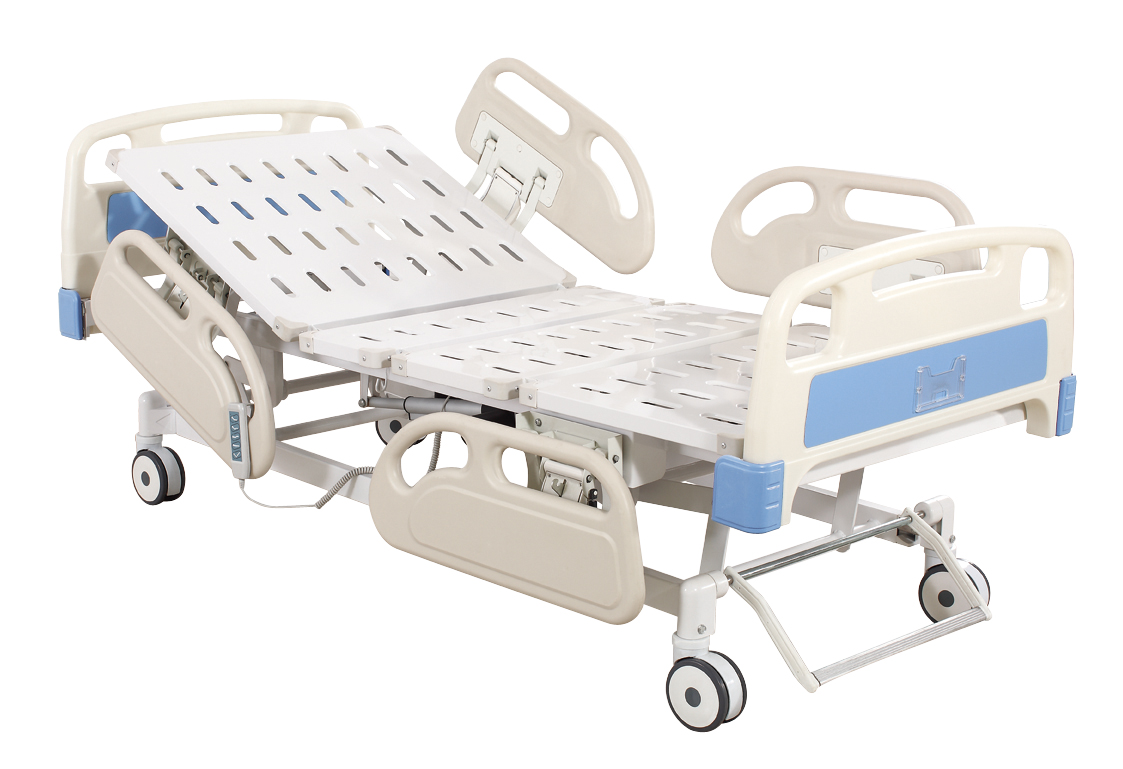
II. Head and Leg Height Adjustment Functions
Hospital bed for the elderly features independent head and leg height adjustment systems.Medical bed for elderly patients offers headrest adjustments from 0-85°,the treatment bed for home care meets patients' needs for eating, reading, and respiratory therapy.Medical beds offer adjustable legroom from 0-40°, which can help reduce swelling in the lower limbs and promote blood circulation.Some medical beds also support preset positions such as "semi-recumbent" and "knee-bent" positions, which can be precisely adjusted with one-button operation.Regular beds, even if they have height adjustment functions, are mostly designed with the whole body tilted, and the head and feet height of regular bed cannot be adjusted separately.Regular beds can meet basic leaning needs, but the adjustable angle of the regular bed is usually no more than 30°, making them unsuitable for medical care scenarios.
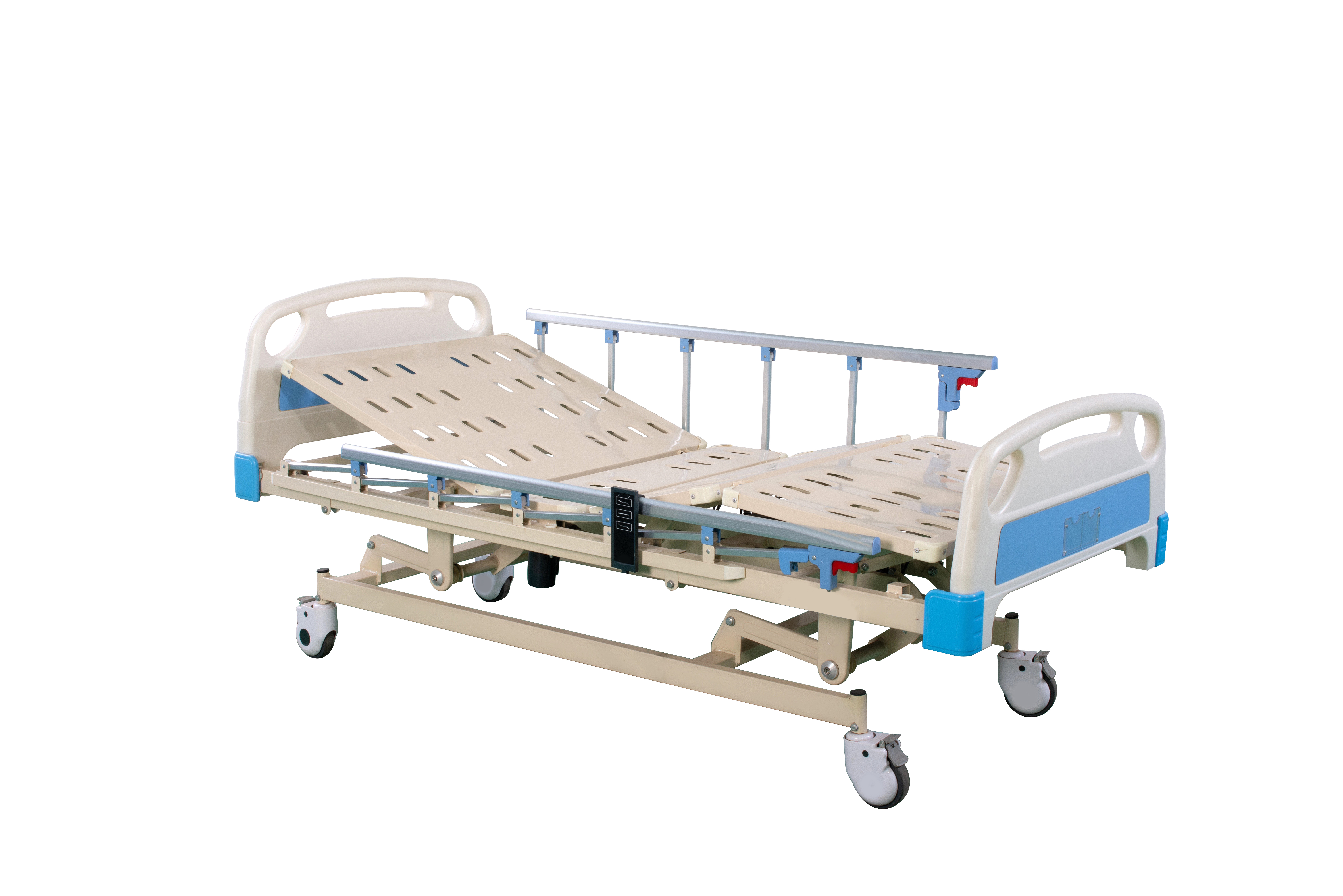
III. Side Guardrails and Safety Features
Side guardrails are a core safety feature of treatment bed for home care. They are typically foldable double guardrails, at least 20cm high, with the gap between the guardrails strictly controlled within 5cm to prevent limbs from getting trapped or falling out of bed when the patient turns over. Some intensive hospital bed for the elderly is also equipped with additional safety features such as pressure ulcer pads, restraint straps, and the treatment bed for home care is also equipped with an emergency call button to further enhance patient safety.Side guardrails on regular beds are mostly optional accessories, commonly found in children's or elderly beds. These guardrails are lower and have larger gaps, primarily serving a supportive function, lacking professional designs to prevent falls or entrapment, and also lacking the emergency protection features required in medical settings.
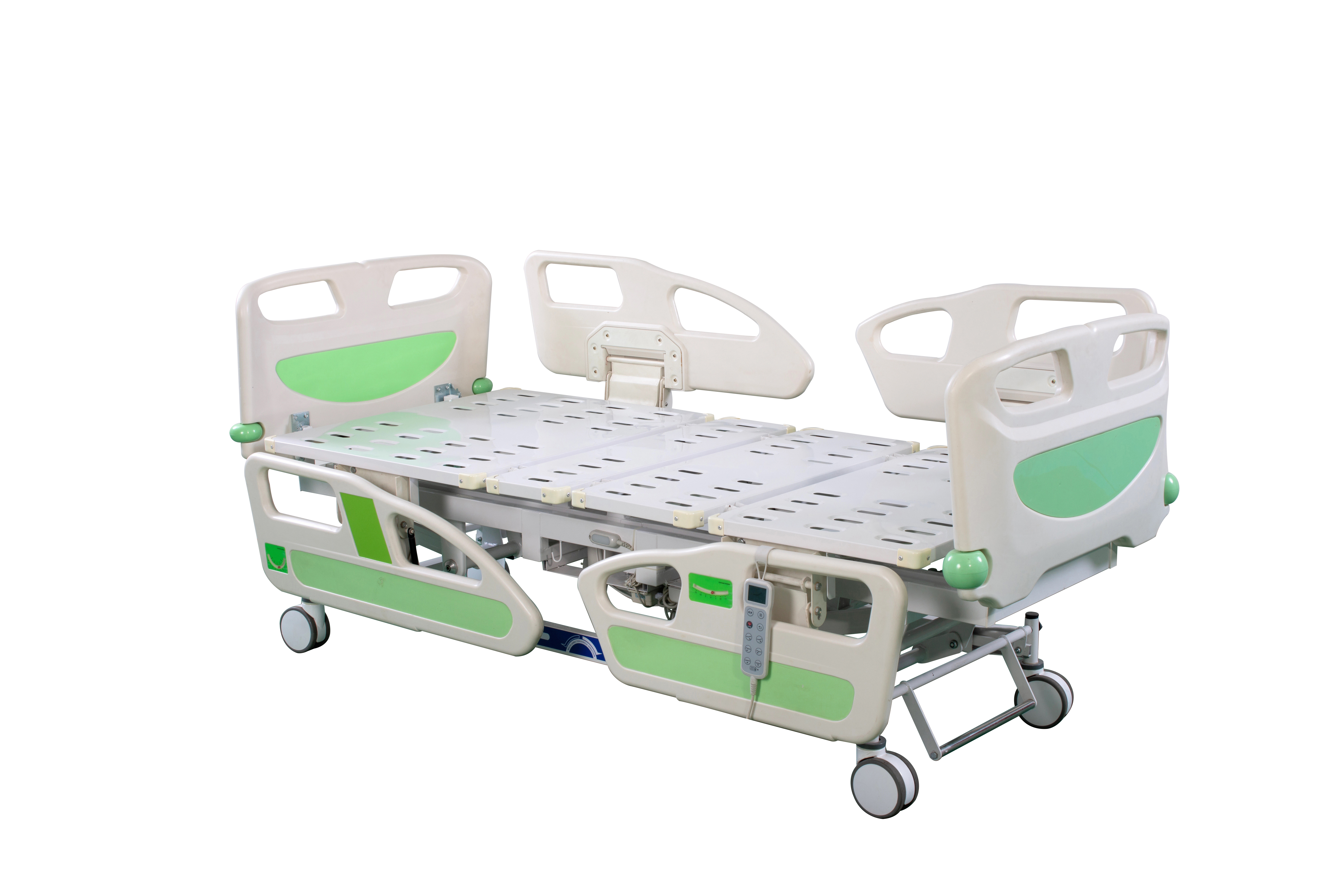
IV. Convenience of Bed Movement
The treatment bed for home care is designed with patients' movement needs in mind. The treatment bed for home care's bed board is adjustable in sections, and with height-adjustable headboard and footboard, patients can independently perform actions such as turning over, sitting up, and moving without much assistance. Some treatment bed for home care is also equipped with bedside tables and IV stand interfaces, facilitating activities such as eating and receiving IV fluids. Regular beds, typically have a fixed, one-piece bed board. Patients need external assistance to turn over or sit up in bed, the regular beds lack the support features required for medical settings, and the regular beds only meet basic needs such as lying down and sleeping.
V. Weight Distribution Design
The multi-function nursing bed mattresses utilize professional medical materials and employ technologies to achieve even weight distribution, effectively reducing local skin pressure and preventing pressure sores caused by prolonged bed rest. The multi-function nursing bed's mattress surface is typically made of antibacterial and waterproof materials for easy cleaning and disinfection. Regular bed mattresses focus on comfortable sleep, often using materials like foam and springs, emphasizing softness and breathability, but lack a professional weight distribution design. Prolonged bed rest can easily lead to poor local blood circulation, failing to meet the pressure sore prevention needs in medical care.
The essential difference between medical bed for elderly patients and regular beds lies in the distinction between "medical functionality" and "home comfort." When purchasing, consumers need to clarify their needs based on the intended use. If the bed is intended for medical care, post-operative rehabilitation, or similar scenarios, a professional medical bed that meets medical standards should be chosen. If the bed is only for daily sleep, a regular bed will suffice, avoiding confusion about functional boundaries that could lead to inconvenience.
Get the latest price? We will reply as soon as possible (within 12 hours)
Products
News
Top Pick Products
Top Pick News



Top Pick Case



Top Pick Videos
Contact Us
-
Phone:+86 757-85572413
-
Fax:+86-757-85565903
-
Email:gdjianlian@gdjianlian.com