


Detailed steps and precautions for replacing wheelchair wheels
2026-06-08 04:51
Wheelchair wheels are consumable parts, and long-term use can easily lead to problems such as tire wear, deformation, and aging, as well as safety hazards. Properly understanding the wheelchair wheel replacement procedure and precautions is applicable to daily home and rehabilitation care.
Detailed steps and precautions for replacing wheelchair wheels
Wheelchair wheels are consumable parts, and long-term use can easily lead to problems such as tire wear, deformation, and aging, as well as safety hazards. Properly understanding the wheelchair wheel replacement procedure and precautions is applicable to daily home and rehabilitation care.

Replacing wheelchair wheels mainly involves two steps: preparation and the actual replacement. The preparation stage requires matching the appropriate parts. Wheelchairs come in large drive wheels and small swivel wheels. Before replacement, the wheel size, axle, and bearing specifications must be checked. Original parts should be used preferentially to avoid mismatched sizes that could cause loosening or jamming.Prepare tools such as Allen wrenches and non-slip gloves. Operate on a flat and hard surface. Do not work on slopes or soft mats to prevent the wheelchair from tipping over.
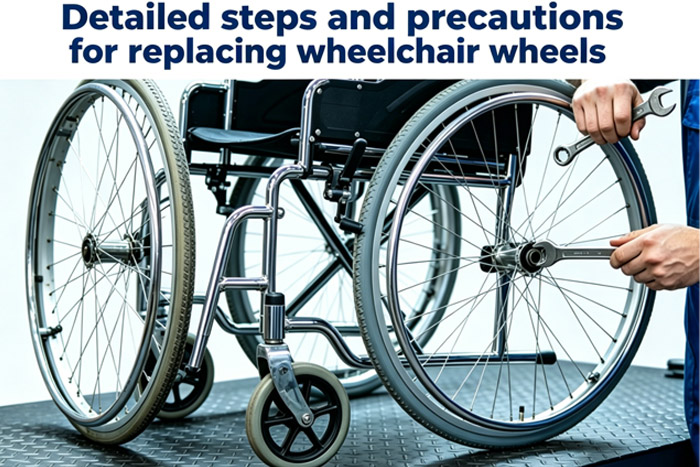
The actual replacement procedure is standardized and simple. First, lock the wheelchair brakes to secure the wheelchair and prevent it from sliding.Next, remove the old wheels. For quick-release wheelchairs, press the center spring button to pull out the wheels. For regular models, use a wrench to unscrew the wheel axle screws and clean the dust and rust from the axle and bearings.Next, align the new wheel with the axle and install it smoothly. When you hear a click as the quick-release wheel clicks into place, it's properly installed. Tighten the screws evenly to avoid uneven force causing loosening. Finally, manually rotate the wheel to test for smooth operation, no shaking or abnormal noise, and proper brake engagement.
There are several safety precautions to take when replacing wheels. It is strictly forbidden to use bulging, deformed, or jammed wheels; installation with faulty wheels is strictly prohibited.After installation, the tightness of the axles and screws must be checked to ensure that the left and right wheels are equally tight and at the same height to prevent the vehicle from veering off course. Strictly distinguish between drive wheels and casters; their functions are different and they should not be mixed. Ensure the casters can turn freely. After changing the wheels, do not immediately apply heavy loads or push the vehicle at high speed. A no-load test must be performed to ensure there are no problems before normal use.
Regular routine maintenance can effectively reduce the frequency of wheel replacement. This includes periodically cleaning debris from the wheel axles, lubricating the bearings, and promptly replacing worn or aged foot pads. Strictly adhering to standardized replacement procedures and maintenance specifications can effectively prevent wheelchair slippage and tipping, providing safety for users' travel and rehabilitation.
![[Beta] Lightweight Pneumatic Aluminum Alloy Wheelchair](https://img.waimaoniu.net/3494/3494-202512221623587007.jpg?x-oss-process=image)
Get the latest price? We will reply as soon as possible (within 12 hours)
Products
News
Top Pick Products
Top Pick News

Top Pick Case



Top Pick Videos

Contact Us
-
Phone:+86 757-85572413
-
Fax:+86-757-85565903
-
Email:gdjianlian@gdjianlian.com