


How to safely use a bed side rail?
2025-12-19 04:00
Bedside Handrails are rehabilitation aids that assist people with mobility issues in getting up or turning over in bed.During installation, the Bed Support Bar must be securely fixed against the hard, weight-bearing edge of the bed.When using this Bed Support Bar, when getting up or turning over in bed, gently use the Bed Support Bar for support.Placing anti-slip mats on the floor and covering the handrails with sponge covers can improve the stability and safety of the Bed Assist Railing.Check the screws and other components of the Bed Assist Railing weekly.
How to safely use a bed side rail?
A Bed Support Bar is a rehabilitation aid that assists people with mobility impairments in getting up or turning over in bed. Proper use of a Bed Support Bar can reduce the risk of falls and ensure user safety. Below is a detailed explanation of how to operate and use a Bed Support Bar.
I. Safety Points During Installation
Ensure the Bed Support Bar is installed tightly against the edge of the bed. The fixing points should avoid gaps or weak areas in the bed frame, prioritizing the sturdy load-bearing parts of the bed frame to prevent loosening or tipping during use.
II. Specific Installation and Usage Points for Different Bedside Handrails
1.Basic Bed Assist Railing: Focusing on Core Stability
The height compatibility after installation is crucial: Before installation, measure the distance from the mattress surface to the mounting holes on the Hand Assistant Rail. Ensure that the top of the Hand Assistant Rail is flush with or slightly lower than the mattress surface by 1-2cm after installation. This height of the Bed Assist Railing allows the user to naturally leverage the Hand Assistant Rail when getting up, preventing improper force application due to the Bedside Handrail being too high or too low.
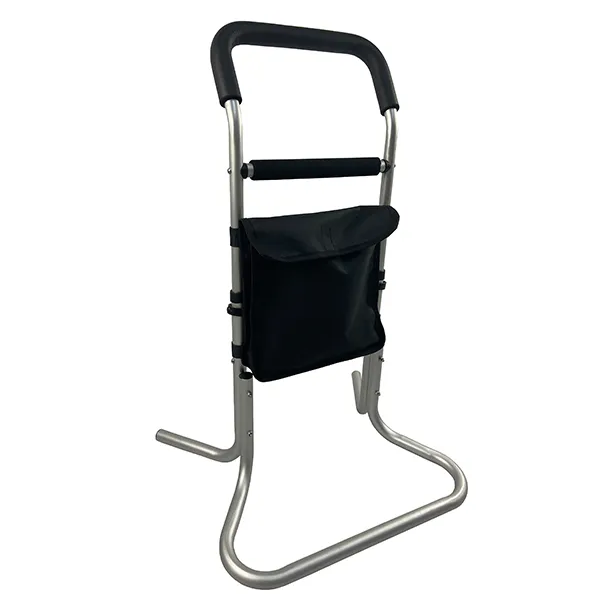
2. Multi-position height adjustable Bed Assist Railing with storage bag: Combining functionality and safety
(1) Height adjustment procedure: When adjusting the Hand Assistant Rail's height, first help the user move away from the bedside to ensure the Hand Assistant Rail is not under load; locate the height adjustment buckle or knob, press or loosen it, and then slowly adjust the height of the Hand Assistant Rail. A"click" sound should be heard for each adjustment position, confirming that the buckle of the Bed Assist Railing is fully locked into the position hole. After adjustment, gently shake the Hand Assistant Rail to check for stability. After adjustment, ensure the Hand Assistant Rail height is compatible with the mattress height.
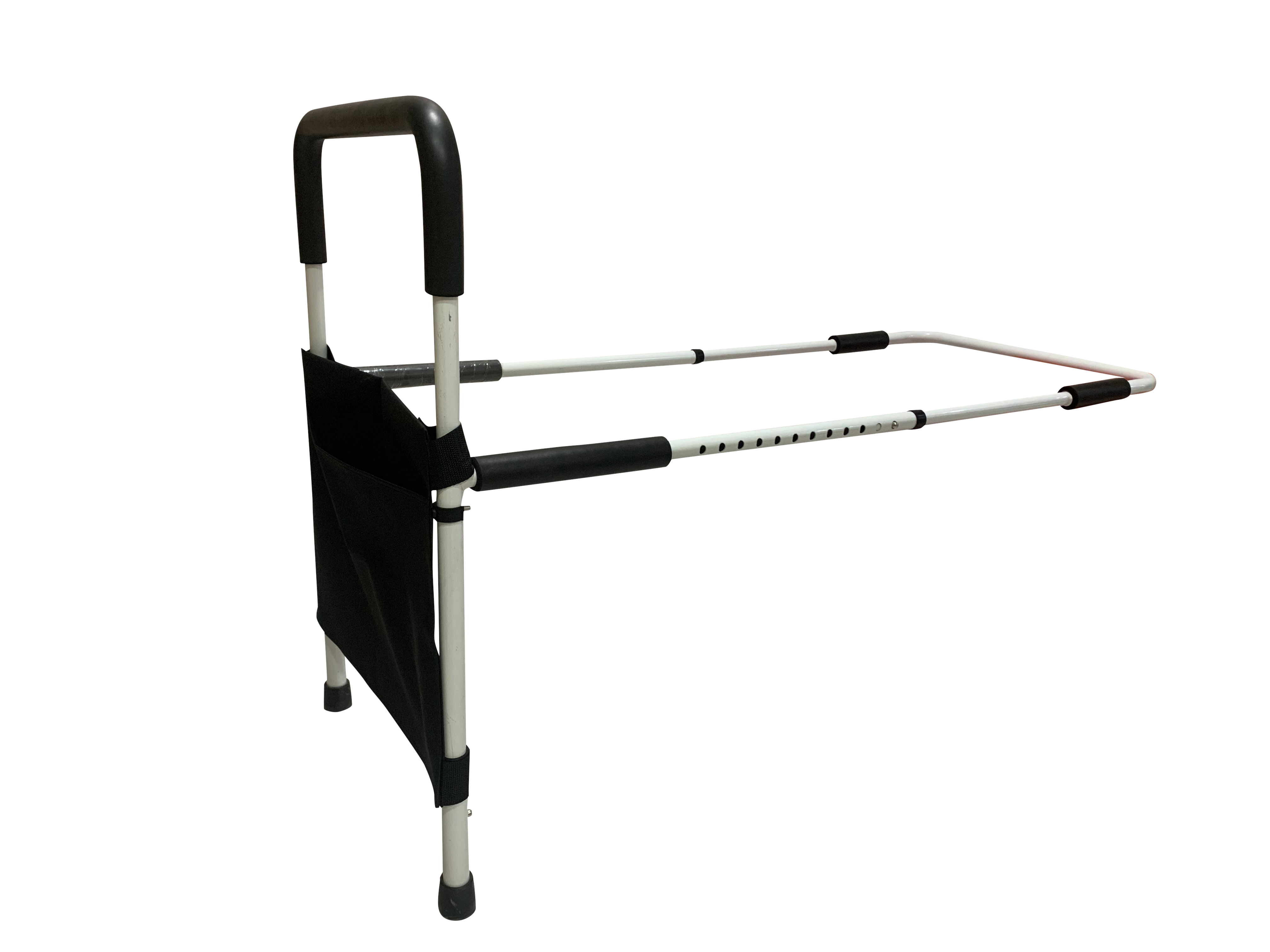
(2) Safe use of the storage bag: The Bedside Handrail's storage bag is only for lightweight, frequently used items. The weight of items placed in the bag at one time should not exceed the rated load capacity of the storage bag as indicated on the product (usually 1-2kg). Heavy objects are strictly prohibited.
III. Safety Guidelines for Use
1. Correct Posture for Getting Up or Turning Over
When getting up: First, lie on your side, support your body with your arms, hold the Hand Assistant Rail with one hand, slowly sit up, and only release the Hand Assistant Rail after your feet are firmly on the ground. Avoid pulling directly on the Bed Safety Rail to get up, which could cause excessive strain on the waist or cause the Bed Safety Rail to tip over;
When turning over: Hold the Bed Safety Rail to adjust your body position, move gently, and avoid pulling or tugging forcefully to prevent the Bed Safety Rail from detaching or the frame from deforming.
2. Prohibited Misuse
Do not use the Bed Assist Railing as a clothes rack or storage rack, and avoid hanging heavy objects to prevent exceeding the weight limit and causing the Bed Assist Railing to break;
Children and pets should be kept away from the Bed Assist Railing to prevent climbing or collisions that could cause the device to shift or tip over.
3. Anti-Slip and Anti-Collision Protection
The ground should be kept dry and clean. If the ground is slippery, an anti-slip mat can be placed under the Bedside Handrail to enhance stability;The metal handrails of the Bedside Handrail can be covered with anti-slip foam covers to increase grip friction and prevent injuries from bumps and collisions.
IV. Routine Maintenance and Safety Checks
1. Regular Inspection of Fastenings: Inspect the screws, clamps, handrails, and other components of the Bedside Handrail weekly. If any loosening, deformation, or rust is found, immediately stop using the Bed Safety Rail and tighten or replace the damaged parts. For Bed Support Bars with storage bags, additionally check the effectiveness of the height adjustment buckles, the stitching of the storage bag attachment points, and whether the Bed Support Bar's bag fabric is damaged.
2. Cleaning and Maintenance: Wipe the surface of the Bedside Handrail with a damp cloth to remove dust, avoiding the use of corrosive cleaning agents; the Bed Support Bar's metal parts can be regularly coated with rust inhibitor to extend their service life; wooden Bedside Handrail should be protected from direct sunlight and moisture to prevent cracking and deformation.
3. Timely Replacement of Aging Parts: Replace easily damaged parts of Bed Support Bar ,such as anti-slip pads and sponge covers when they show signs of wear or aging; if the main body of the Bedside Handrail shows structural damage such as cracks or bending, do not continue to use the Bed Support Bar and contact the manufacturer for repair or replacement.
V. Precautions for Use by Special Groups
1.Elderly individuals or those recovering from surgery: Prioritize Bedside Handrails with widened handrails and good anti-slip properties. Slow down movements when getting up to avoid slipping due to weakness in the limbs;
2. Individuals with physical disabilities: The Bed Assist Railing can be used in conjunction with non-slip gloves to enhance grip stability. If necessary, choose a Bedside Handrail with an assisted standing function.

Get the latest price? We will reply as soon as possible (within 12 hours)
Products
News
Top Pick Products
Top Pick News

2025-03-28
Functions of Commode Wheelchairs
2025-03-18
Are foldable canes safe?
Top Pick Case



Top Pick Videos
Contact Us
-
Phone:+86 757-85572413
-
Fax:+86-757-85565903
-
Email:gdjianlian@gdjianlian.com